
Did you know that nearly 20% of all traffic accidents in the United States occur during rain or snow? Poor visibility is a leading factor in these dangerous events. Taking control of your road safety starts with what you can see through your glass.
Keeping your view clear is a vital safety practice for every driver. By following simple habits, you can extend the life of your equipment and avoid hazards on the road. This guide provides the necessary knowledge to keep your vehicle ready for any weather.
We will walk you through the essential steps to ensure your car remains effective. Proper windshield wiper maintenance is the best way to protect yourself and your passengers. Let’s get started on keeping your path clear and your travels safe.
Key Takeaways
- Poor visibility contributes to a significant portion of annual traffic accidents.
- Regular care of your equipment is essential for safe driving in bad weather.
- Simple habits can significantly extend the lifespan of your vehicle components.
- Clear vision is a critical factor in preventing road hazards.
- Following these steps ensures you stay prepared for any climate conditions.
Essential Windshield Wiper Maintenance Tips for Better Visibility
Your windshield wipers protect you from bad weather. Keeping them in good shape means you can see the road well, even in heavy rain or snow. This helps keep you and your passengers safe on the road.
Recognizing the Signs of Worn-Out Blades
Check your wipers often to catch problems early. Good wiper blade maintenance means looking for signs of wear that could be dangerous.
Streaking and Smearing Patterns
Thin lines or big water spots after wiping mean your blades are worn out. This happens when the rubber gets old or dirty. Without clear glass, driving is risky.
Chattering Noises During Operation
A thumping or chattering sound means your blades are failing. This noise means the blades are stiff or bent. Ignoring these sounds can damage your windshield, costing more to fix than new blades.
“Safety on the road is not just about the engine; it is about the clarity of your vision through the glass.”
The Importance of Regular Windshield Wiper Fluid Checks
Checking your wiper fluid often is key to clear vision. Even the best blades can’t remove dried bugs or salt without the right fluid. Make sure to check your fluid levels monthly to stay ready.
Choosing the Best Wiper Blades for Durability
Choosing durable wiper blades is important. The best wiper blades for durability save you money and hassle in the long run. Look for these features:
- Silicone-based rubber for longer life in extreme temperatures.
- Aerodynamic designs that prevent lifting at high speeds.
- Easy-to-install connectors that fit your specific vehicle model.
How to Perform DIY Windshield Wiper Maintenance
Learning diy windshield wiper maintenance is easy with a few steps. It keeps your car ready for the road. Knowing how to change wiper blades saves time and money.
Preparing Your Vehicle for Blade Replacement
Gathering Necessary Tools and Supplies
First, gather all needed items. You’ll only need a few basic things to do the job right.
- A clean, soft microfiber cloth.
- Your new, compatible wiper blades.
- A towel to protect the glass.
Safety Precautions for Your Windshield
Always use a folded towel on the windshield. It prevents the wiper arm from cracking the glass. Safety is your top priority when working on your vehicle.
Step-by-Step Guide to Changing Wiper Blades
Removing the Old Wiper Assembly
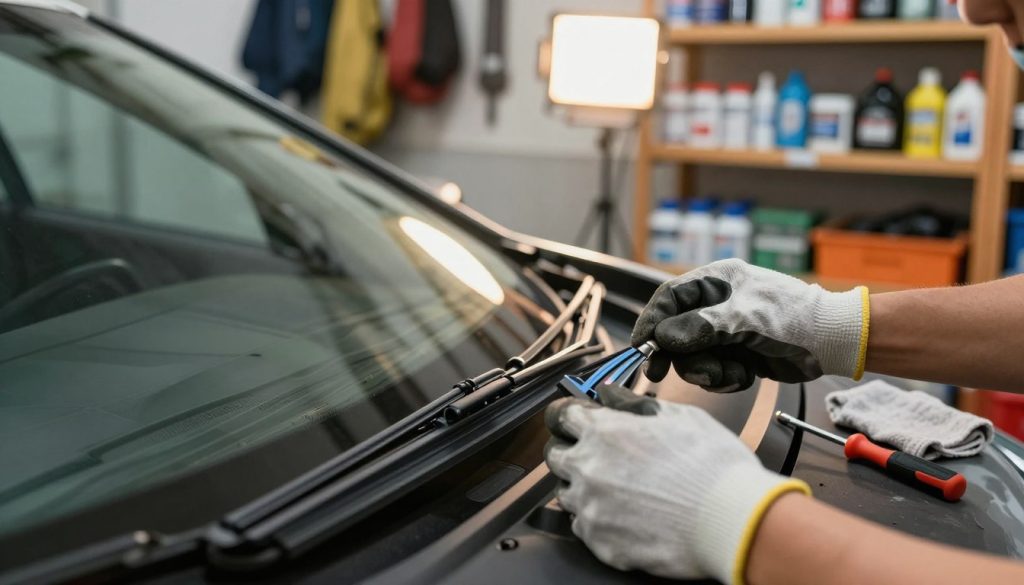
Start by lifting the wiper arm off the windshield. Find the small tab on the underside of the blade connector. Press it firmly and slide the old assembly down to release it from the hook.
Installing New Blades Securely
Align your new wiper blade replacement with the wiper arm hook. Slide it up until you hear a click, which means it’s locked. Then, gently lower the arm back onto the glass to finish the job.
Cleaning Your Windshield and Wiper Rubber
Removing Debris and Grime
Even new blades can streak if the glass is dirty. Clean the windshield with glass cleaner to remove dirt, sap, and bugs. A clean surface helps the rubber wipe without streaks.
Extending Blade Life with Proper Care
Regular windshield wiper care makes your blades last longer. Wipe the rubber edges with a damp cloth every few weeks. This stops grit from tearing the rubber edge too soon.
Conclusion
Clear vision is key for safe driving in rain, snow, or sleet. Keeping your vehicle in top shape is essential. This ensures you’re ready for any weather.
Staying ahead with inspections and replacements brings peace of mind. It boosts your visibility and confidence on the road. Brands like Bosch or Rain-X provide top-notch products for your safety.
This weekend, check your wiper blades and fluid levels. These small steps can save you from big troubles on your next drive. Keep your windshield clear and your equipment working well for many miles ahead.